Showing posts with label indonesian. Show all posts

Tuesday, September 28, 2021

sop merah


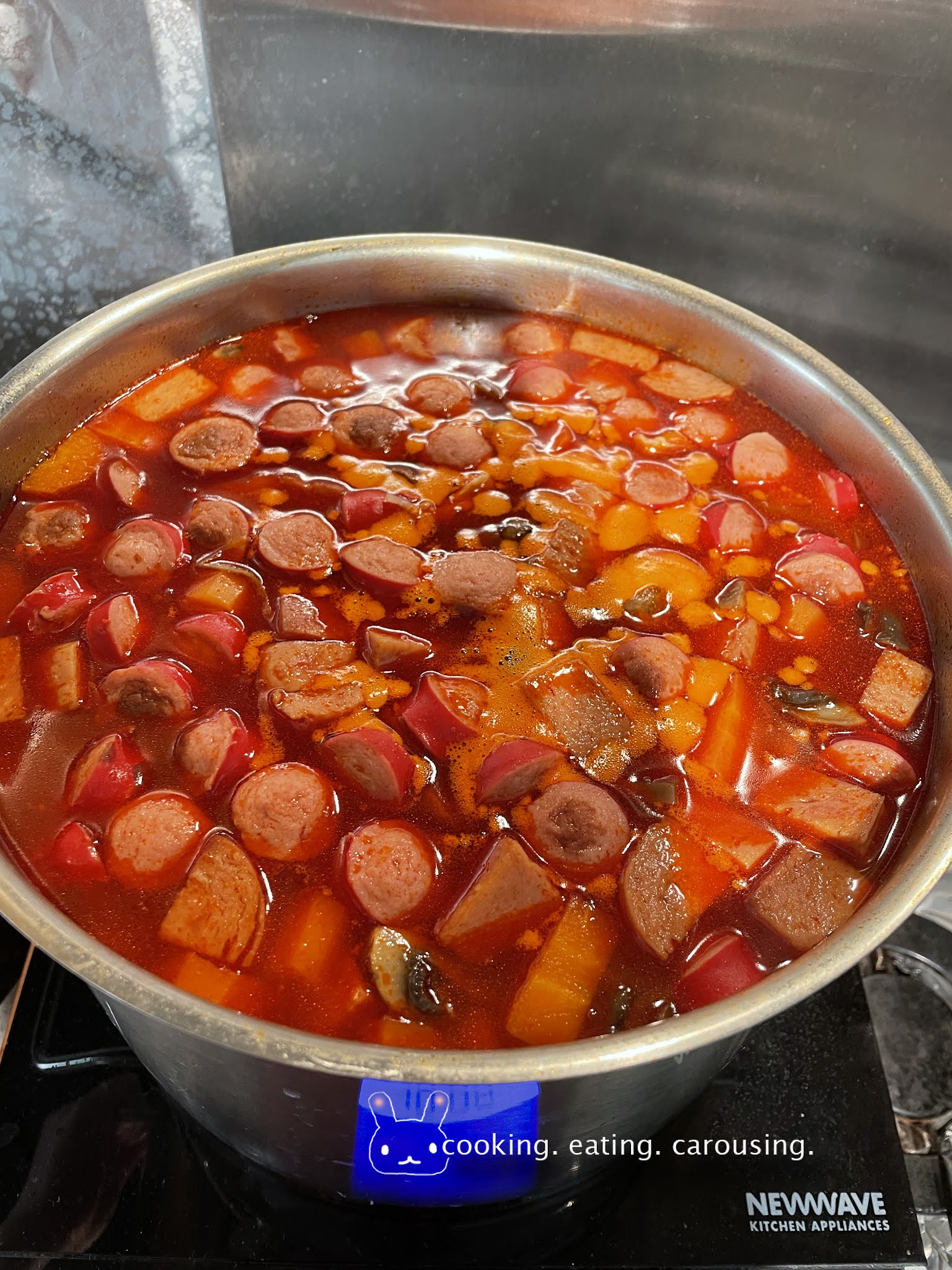
Sop merah is comfort food in my family. It’s a type of Indonesian chicken soup with sweet and sour taste. The red colour comes partially from the juice of carrots and tomatoes, but mostly from the sweet and sour sauce. If I were to make a comparison to other cuisine, it would be like the Italian minestrone soup in that it is tomato based soup, but it’s also like Korean budae jjigae 부대찌개 in that it has canned spam and frankfurts in it. But it’s not really an exact comparison. You just have to try it for yourself.

When I cook this, I always cook a massive amount. Like spagbol, I eat what I want and freeze the rest for those days I just can't be bothered to cook.

Since I blogged about this last, I’ve made a few changes to make it easier but still authentic.



Ingredients:
  • 2kg chicken drumsticks, skin off
  • 1 bunch spring onions, half bunch left whole, the other half bunch is sliced
  • 1kg carrot, half is juiced (pulp removed), the other half is cut into 1cm pieces
  • 1kg tomatoes, juiced (pulp removed)
  • 500g small swiss brown mushrooms, quartered
  • 250g frankfurt sausages, cut 1cm pieces and pan-fried
  • 2 cans of spam (I like the "less sodium" type), cut into 1cm pieces and pan-fried
  • 2 of 240g Lee Kum Kee sweet & sour sauce
  • Salt, white pepper to taste
  • Vinegar, sweet soy sauce/sugar to taste

Optional fried prawn balls:
  • 500g prawns, minced
  • 3 garlic cloves, minced
  • 1 tsp white pepper
  • 2 tsp salt

Method:
  1. Boil the chicken drumsticks in an 8L stock pot with half a bunch of whole spring onions, tomato juice, carrot juice and water to cover. Season with 2 tbsp salt, 2 tbsp white pepper.
  2. After 20 minutes of boiling, add the carrots and swiss brown mushrooms. Boil for another 20 minutes.
  3. Strain the chicken and shred it to bite-sized pieces, and add it back to the broth.
  4. Add all the sweet & sour sauce, the pan-fried spam and sausages to the broth, wait until it comes back to the boil. The broth should be watery, if it’s too thick you need to add more water. In my 8L stock pot, with all ingredients inside, I added water to the brim.
  5. Taste if the sweet and sourness is just right. If it needs more sourness, add vinegar. If more sweetness is required, add max 3 tbsp of ABC kecap manis (sweet soy sauce), and sugar if you need more sweetness.
  6. Garnish with spring onions and serve with steamed jasmine rice

Optional prawn balls:
  1. Mix ingredients for prawn balls.
  2. Shaped into sausages and deep-fry in oil until golden
  3. Cut into 1cm pieces and add them to the soup before serving.
If I'm perfectly honest, the prawn balls most often than not I don't bother with. It adds another level of specialness to the soup. But, sometimes it is just one steps too many.

Also, with the sweet and sour sauce, I've tried a few different brands, but the one that is to my taste is the Lee Kum Kee brand. Feel free to use any brand you like.

Thursday, August 14, 2014

Complimentary Breakfast: Vice & Virtue

I am somewhat picky with my choice of holiday accommodation. It has to have a clean bathroom. Cleanliness is next to godliness, as is with quietness. I avoid “party” hotels and hotels near them, of which there are a few in Bali. Quality of sleep is very precious to me. What don't factor in my decision are the complimentary breakfasts.

Thursday, July 31, 2014

Porcine Head-to-Tail Eating in Nusa Dua

From left to right:
Babi guling ala bakas - Rp 50,000
Babi guling campur - Rp 50,000
Sate babi - Rp 40,000
The practice of using every bit of the animal is not some fancy new-fangled phenomenon in Indonesia. And eating these lesser than prime cuts is also not something that’s extraordinary. It’s a normal everyday occurrence, examples of which can be found all over the country. Like sop kikil (broth with soft cartilage from cow’s feet); or babat hitam (beef tripe cooked in spices); or the ubiquitous soto daging (beef and intestines in tumeric broth).

In Nusa Dua, Warung Bakas specialises in pork, spit-roasted pork to be exact. This place leaves the infamous Babi Guling Ibu Oka in the dust.

Saturday, June 28, 2014

In Ubud, Cooking with New Friends

Bali can be many things for many different people. For the aussie school leavers looking for some fun, Kuta is party central. For the honeymooners, there's Seminyak. For the executives and families with slightly deeper pockets, Nusa Dua has its posh resorts. But Ubud, it always bill itself as the cultural epicentre of the island, where the yoga freaks congregate, where struggling balinese artists sell their work, where the Balinese organic and raw movements started.

Saturday, June 21, 2014

konro bakar in makassar, south sulawesi

Nasi + Konro bakar
When I told an Indonesian colleague at work that I was going to Makassar, he had one request: don't forget the konro!

Saturday, June 7, 2014

nyuknyang OR bakwan?

When our uncle told us what nyuknyang was, I asked, “Aren't they just bakwan?”

Wednesday, June 4, 2014

makassar street food

Before we went to Makassar, I agreed to not bring my bulky DSLR camera. It was my first trip to the city, so I was torn about it. But with the aim of having the least fuss as possible, I relented.

Tuesday, March 12, 2013

malang, an unfinished list

Mount Arjuna-Welirang in the background
Did you know the word malang in bahasa indonesia means poor, wretched, unlucky? If so, why would anyone want to visit a city called Malang?

Wednesday, February 27, 2013

martabak agung, say yes to junk food

Don't you find that sometimes the greasiest, most unhealthy food are the tastiest? Like skinny french fries with a slab of juicy beef patty and crispy bacon inside a pair of pillowy burger bun. Or a bowl of instant ramen with its al-dente curly golden noodles and its tear-jerking spicy broth. Or slices of spam simply dipped in egg and fried until golden brown,  smeared with some ABC chilli sauce, eaten with a bowl of steamed rice.

Tuesday, February 19, 2013

terang bulan, on a moonless night

Did you know that chocolate sprinkles (or jimmies for americans) were first invented by the dutch? There it goes by the name of hagelslag (hail storm). It was brought to indonesia during the dutch colonial times, where it has been adorning children's breakfast sandwiches ever since. Since its introduction, in indonesia the chocolate sprinkles somehow came to be named meses. But whatever it's called, I love it and I can certainly remember the happiness I felt when eating a blue band slathered & chocolate sprinkled sandwich.

Tuesday, February 12, 2013

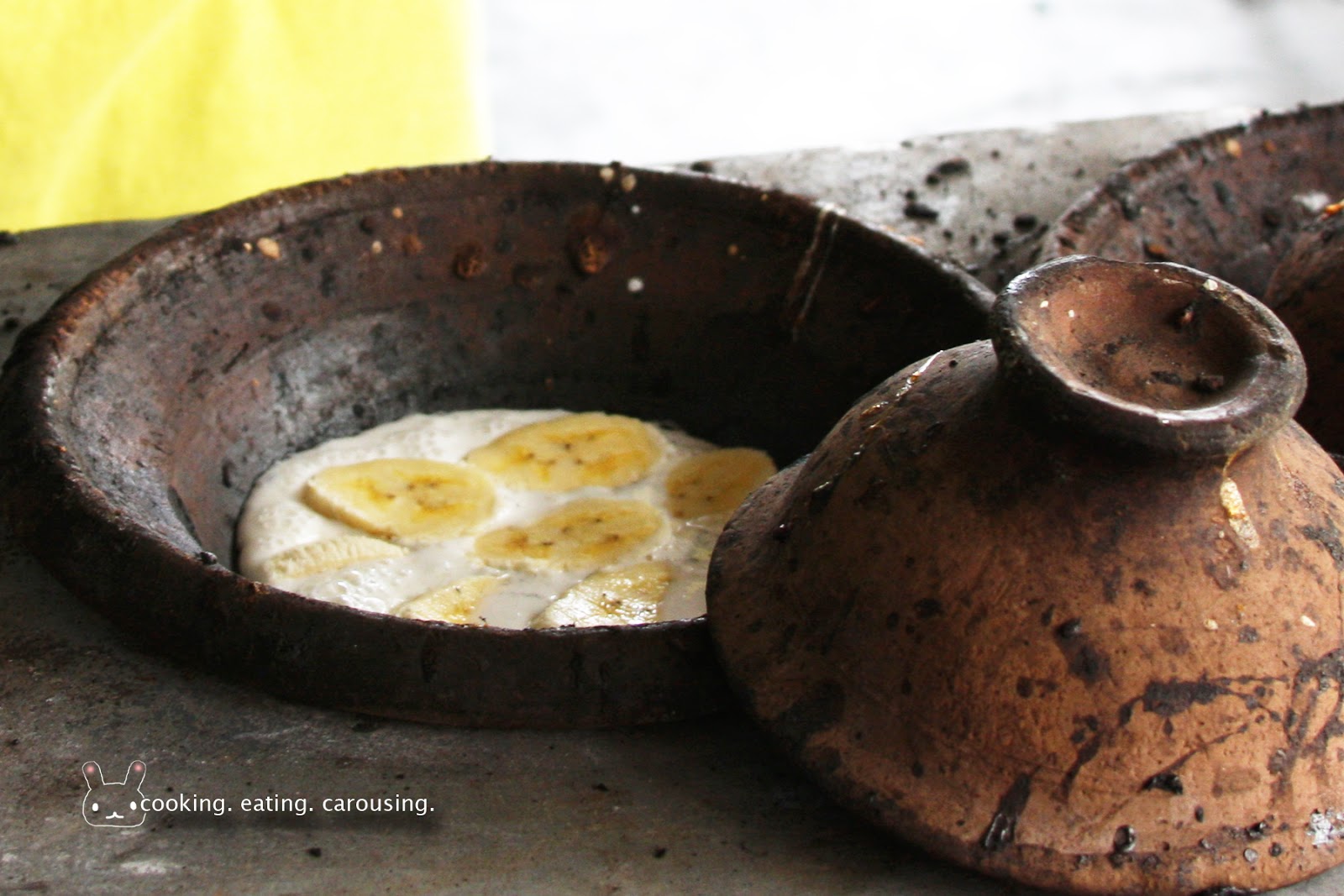
surabi imut, a serendipitous find in klojen

After visiting a few jajanan (traditional snack) stores in Pasar Klojen, having no luck in finding serabi, I tried one last store, which looked promising with its large spread of jajanan. Alas, it wasn't meant to be, the store owner didn't have serabi either.

What he did have was a tip about a warung opposite his shop that makes fresh serabi pancakes. I've never had fresh serabi before, naturally I was intrigued, especially when it's recommended by a local.


Tuesday, February 5, 2013

perut ayam, an un-chicken chicken intestines

A good perut ayam should have a slightly chewy texture. It should have a nice golden brown  colour on the outside, yet fluffy and airy on the inside. A great perut ayam, however, should be easily unfurled, without breaking up, to look like its namesake chicken's intestines.

Wednesday, January 30, 2013

lodeh manisa, a maid's recipe

I woke up one morning with an intense craving for lodeh manisa. The only person who can make it the way I like it is our maid in indonesia, Mbak Mi. I emailed my father and asked for it to be added to the list of food I'd like to eat on my visit in a few months to Malang, East Java. My father emailed back and assured me it won't be a problem. My craving subsided, if only by a little bit, knowing that it won't be long now.

Saturday, December 29, 2012

Tuesday, November 20, 2012

babat hitam, a cringeworthy deliciousness

Bali telor
Its raw form resembles a rug, with a broad leafy pile, it's soppy, almost like a wet towel. The base, where the leafy pile is fastened, is white in colour, thick and chewy in texture. The pile is made of thin and leaf-like sheets with pimply surface, that break easily when pulled from its base, these leaves are dark brown / black in colour.

Friday, November 9, 2012

angsle, savings for a rainy day

I must admit, I was a scrawny little kid when I was young. Getting me to eat anything, be it during meal time or snack time, was a task. It's actually quite astonishing when I think about how much I love food now, so much so that I had to start my own food blog to channel it all. But, my preference will always be more with the savouries.

Wednesday, October 24, 2012

soto ayam lamongan

I'm not surprised that soto is one of the top contenders for the title of Indonesia's national dish. I'd probably be more surprised if it doesn't win this imaginary contest.

Soto is one of those dishes that ticked all the boxes. It's packed with enough tropical spices to make it somewhat exotic, but the flavour is mild enough to be loved by indonesians and foreigners alike. If you're a new visitor to the country and you've had your lifetime share of nasi goreng in your brief visit, soto would be my suggestion for you to have a go at.

Saturday, September 29, 2012

ayam goreng tenes

Fried chicken, one might say, would be the dish that transcends culture, country, age and palate. I can't think of a lot of people who wouldn't be satisfied with a beautifully fried chicken (except vegetarians, of course).

Tuesday, September 25, 2012

pastel tutup malang

Pastel tutup, for all intents and purposes, is the indonesian version of a shepherd's pie. Like the english pie, pastel tutup is a meat pie with a potato crust topping. But that is where the similarities end. Unlike an english shepherd's pie, which can be heavy or even fatty depending on what type of meat mince used, pastel tutup's filling is light and a joy to eat.

Friday, September 14, 2012

roti tugu bakery klepon ijo

Jajanan pasar are a type of snack foods, traditionally made by small home businesses (usually one-woman operations) and sold in small shops in the market. These small shops would usually have the snack loosely plastic wrapped but unsealed, but sometimes the plastic may also be sealed crudely (candles are used to burn the plastic and plastic together), and other times they can also be unwrapped and simply stacked against each other in a large tray.

Related Posts with Thumbnails